

How does it all work then?
At its simplest, the Ocean Buffer Project grows marine microalgae in contained systems and measures the carbon they remove.
If you’re a bit of a nerd, like us, here is the process in detail.
1. Creating a Mini Ocean
We add a carefully selected nutrient solution to support algal growth. Inputs are chosen for low toxicity, compost compatibility and environmental safety. Our goal is to make these as close to the real ocean as possible!
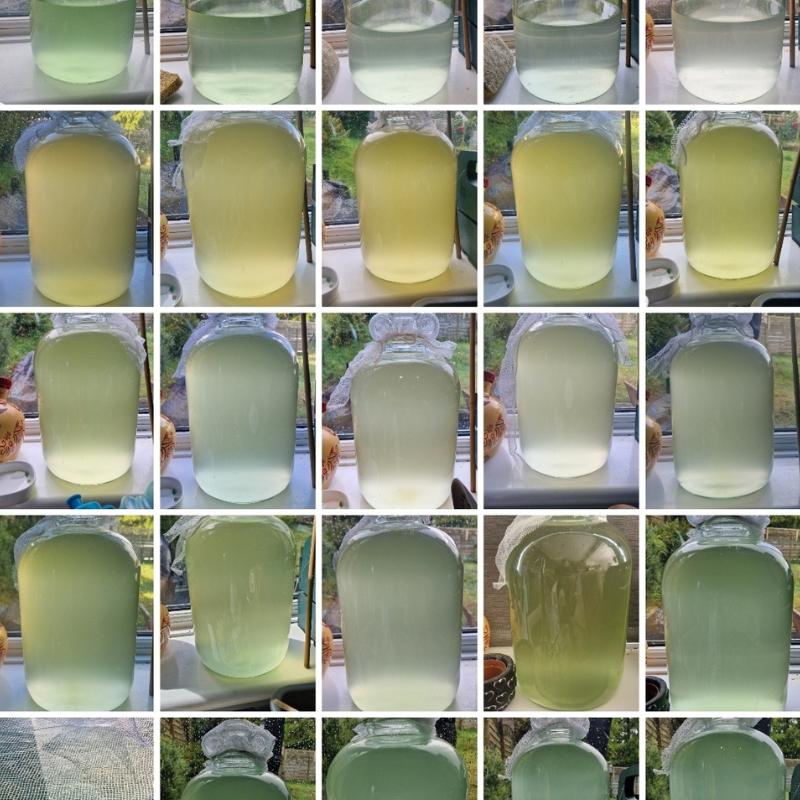
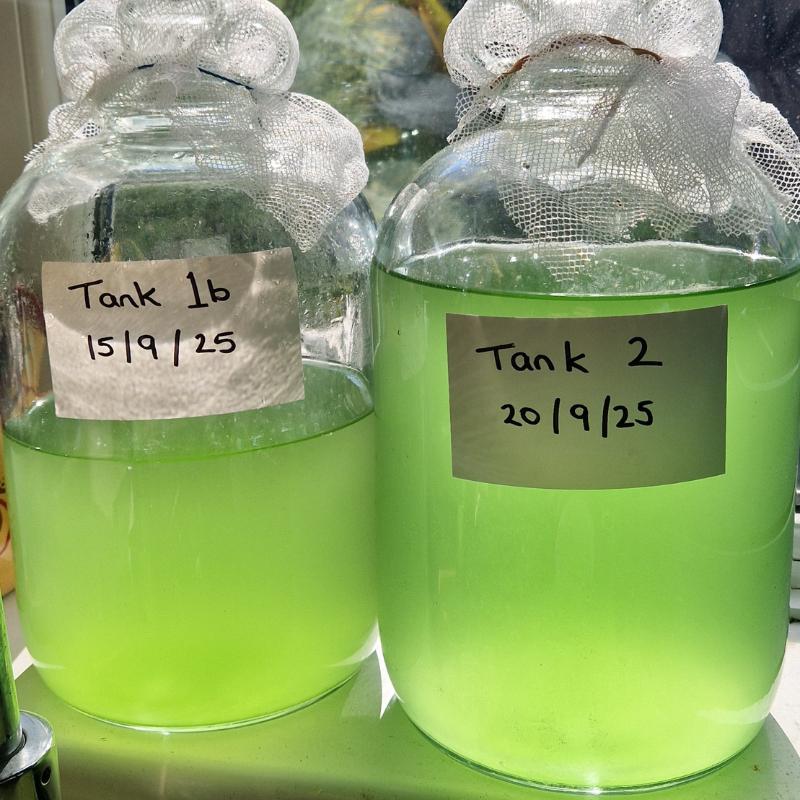
2. Growing Nannochloropsis
We cultivate Nannochloropsis, a resilient marine microalga widely used in aquaculture, selected for its ability to:
- Tolerate varying light and salinity
- Fix carbon efficiently
- Produce dense, stable cultures
- Remain non-toxic and well studied
Using off-grid lighting and aeration, the algae photosynthesise — absorbing dissolved carbon dioxide and converting it into biomass.
We continuously monitor pH, temperature, salinity, and culture density to track system performance. In selected systems, we introduce responsibly sourced Cornish serpentine rock to explore its potential to increase alkalinity and enhance carbon buffering through natural weathering processes.
3. Harvesting the Biomass
When cultures reach sufficient density, we harvest the algae.
We prioritise non-toxic flocculation (separation) and settling methods, avoiding chemical residues that could compromise safety or downstream impact.
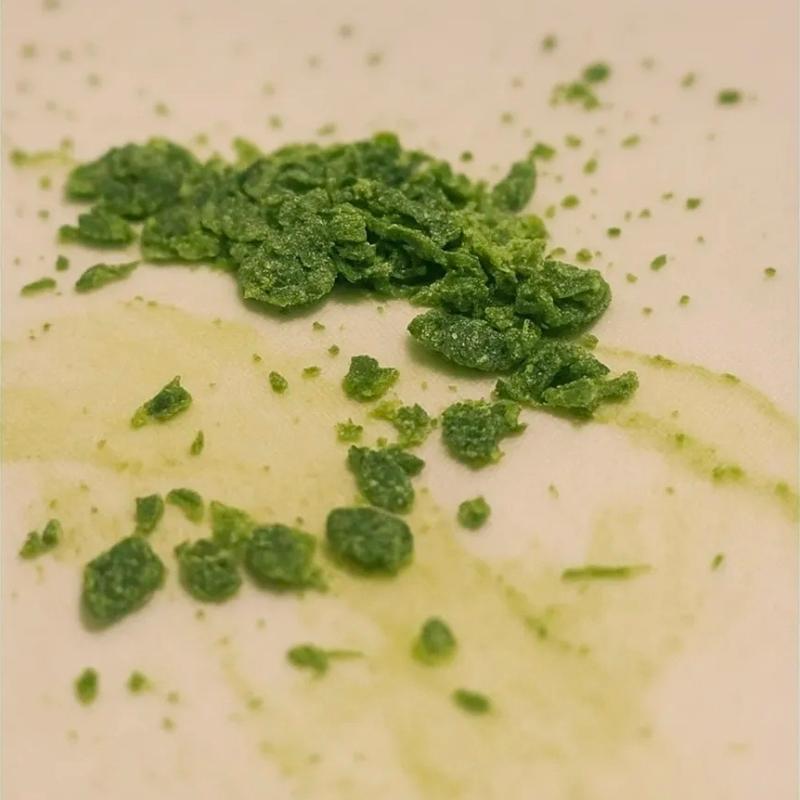
The biomass is then dried using recycled air drying racks.
What Happens to the Removed Carbon?
Capturing carbon is only meaningful if it is stabilised responsibly.
As microalgae grow, they convert dissolved carbon dioxide into biomass. If that biomass decomposes rapidly, much of the carbon would eventually return to the atmosphere. Our focus is therefore not only on growth, but on long-term carbon storage.
We prioritise methods that are:
- Low impact
- Non-toxic
- Food safe and soil safe
- Compatible with compost and land systems
- Transparent and measurable
Biochar
One of the primary routes we are exploring is biochar.
Biochar is produced when organic material is heated in a low-oxygen environment through a process known as pyrolysis. Instead of fully burning, the biomass is transformed into a stable, carbon-rich material similar to charcoal.
This process significantly slows the return of carbon to the atmosphere. When used appropriately in soil systems, biochar can remain stable for decades or longer while also improving soil structure and water retention.
We are committed to ensuring that any biochar production linked to the Ocean Buffer Project follows responsible, low-emission practices. We are exploring collaboration with Cornwall-based specialists such as Restord to ensure that carbon stabilisation aligns with best environmental standards.
Mineral Binding & Clay
We are also exploring ways to bind harvested algae with mineral materials and pottery clay.
By incorporating algae into mineral-rich substrates or ceramic forms, we investigate whether captured carbon can be stored within durable, long-lasting objects.
Clay-based materials, when dried using off-grid methods, offer structural permanence while creating opportunities for community involvement in the carbon storage process.